
CLINICALLY PROVEN BIOAEROSOL CONTAINMENT
Toilet Plume Aerosols are a Major Health Risk for Healthcare Workers, Patients and Family Caregivers
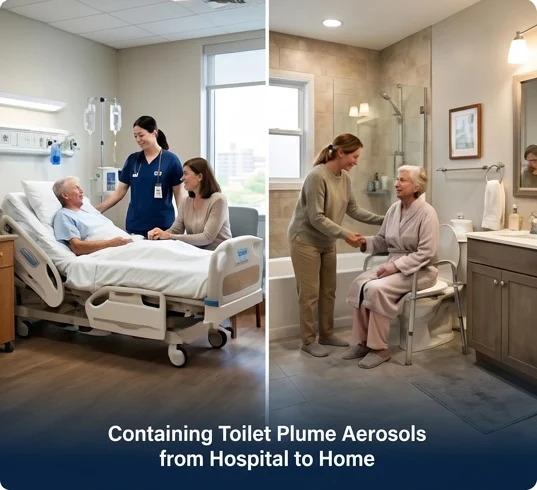
Hospital and home toilets release hundreds of thousands invisible, hazardous particles up to 6 feet into the air with every flush. The Splashblocker® blocks up to 99.98% of toilet plume particles, protecting healthcare staff, patients and family caregivers at home.
THE SCIENCE OF TOILET PLUME
What is Toilet Plume Aerosol?
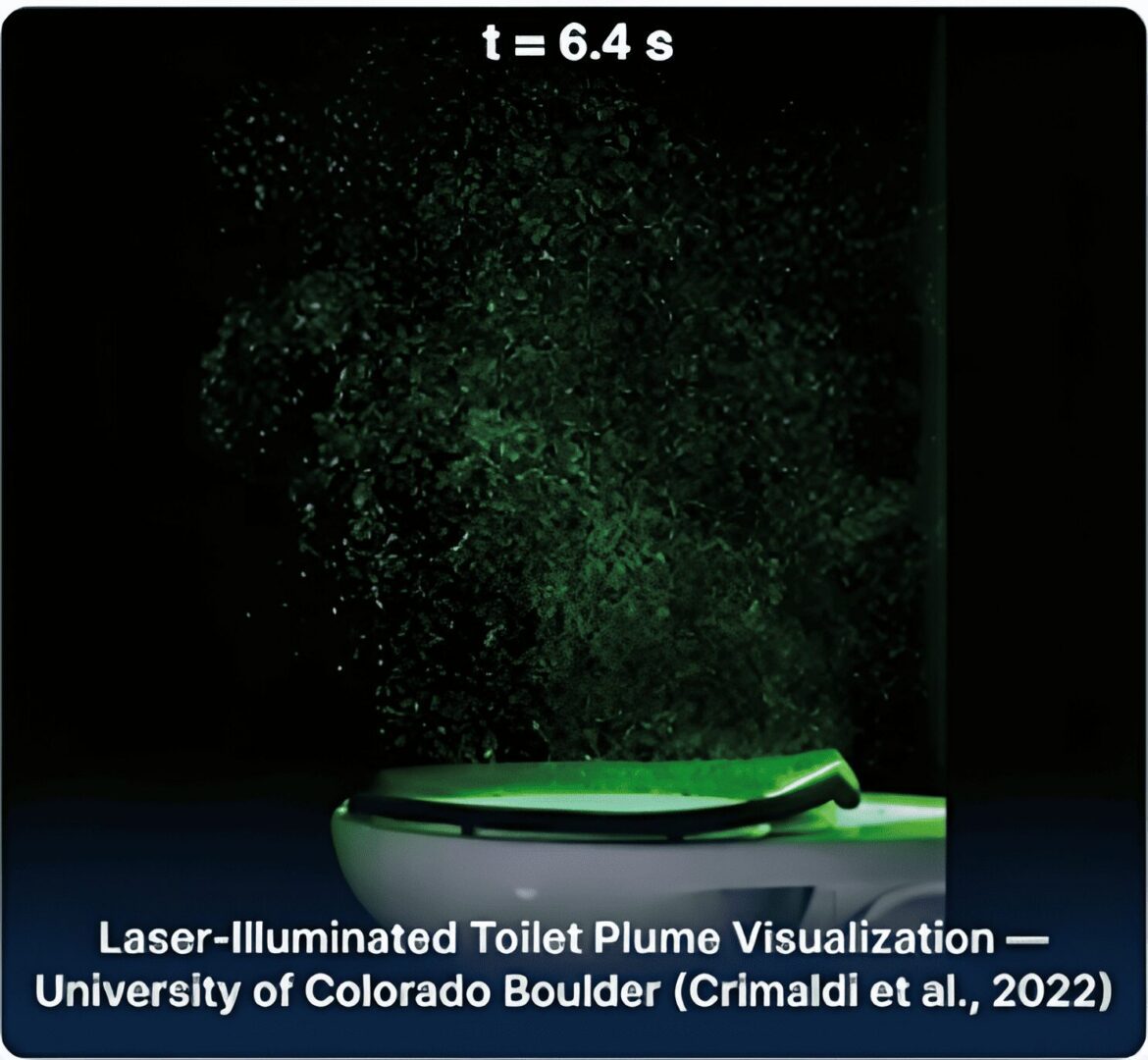
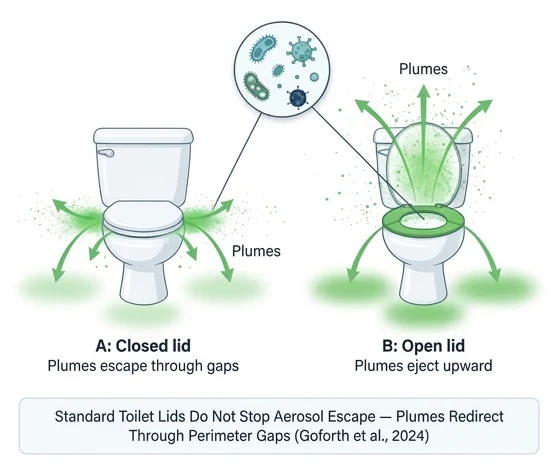
Flushing an unshielded toilet ejects invisible aerosolized droplets and bioaerosols at speeds up to 6.6 feet per second and heights exceeding 5 feet into the surrounding air. These microscopic particles can carry bacteria, viruses and hazardous drugs, settling on surfaces or remaining suspended in the air for hours.
- ~95% < 2 Microns
Highly respirable particles - 5+ Feet
Vertical Reach - Hours Airborne
Lingering Micro-Droplets
DUAL EXPOSURE PATHWAYS
Why Exposure to Toilet Plume Aerosol is a Serious Health Risk
Unshielded flushing generates airborne bioaerosols that spread pathogens and toxic drug residues across hospital wards and home environments.

Infectious Diseases
Pathogen Aerosolization & Surface Contamination
-
Flushing unshielded toilets aerosolizes enteric and respiratory pathogens (including C. difficile, norovirus, SARS-CoV-2, and multidrug-resistant organisms) into breathable air.
-
Microscopic droplets settle onto high-touch bathroom surfaces, door handles, patient call buttons, and equipment, creating persistent contact hazards.
-
Poses acute cross-infection risks for immunocompromised patients, oncology wards, nursing staff, and family caregivers at home.
Studies & Evidence: Peer-reviewed hospital & bathroom bioaerosol studies (Johnson et al., 2013; Best et al., 2012; Crimaldi et al., 2022; Cai et al., JOEH 2024).

Hazardous Drugs
Cytotoxic Residues & Occupational Exposure
-
Chemotherapy patients excrete active, cytotoxic drug metabolites in urine and stool for up to 48–72 hours post-treatment.
-
Flushing unshielded toilets aerosolizes these toxic residues into fine bioaerosol plumes, contaminating ward air and surrounding surfaces.
-
Creates unintended inhalation and contact exposure risks for oncology nurses, hospital environmental services (EVS), and family caregivers.
Studies & Evidence: Roussel, C, et al, Meta-analysis of chromosomal aberrations as a biomarker of exposure in healthcare workers occupationally exposed to antineoplastic drugs, 2019, Mutation Research 781; Ratner, P. (2010); Skov, T. (1992); Yuki, M. (2013); IARC Website:
WHY CURRENT WORKAROUNDS FALL SHORT
Current Ineffective Methods of Blocking Toilet Plume Aerosols
Standard habits, makeshift covers, and conventional lids fail to contain airborne bioaerosol particles at the source.
-
 Flush and Run
Leaves staff and patients directly exposed to aerosolized pathogens during flush.
-
 Plastic Backed Pads
ONS omitted them from guidelines due to ineffective mitigation of contamination.
-
 Reactive Surface Cleaning
Cleaning up contamination after fallout rather than stopping at the source.
-
 At Home Standard Lids
Inconsistent sealing and gaps permit bioaerosol escape.
ENGINEERED SOURCE CONTAINMENT
The Proven Solution: Splashblocker®
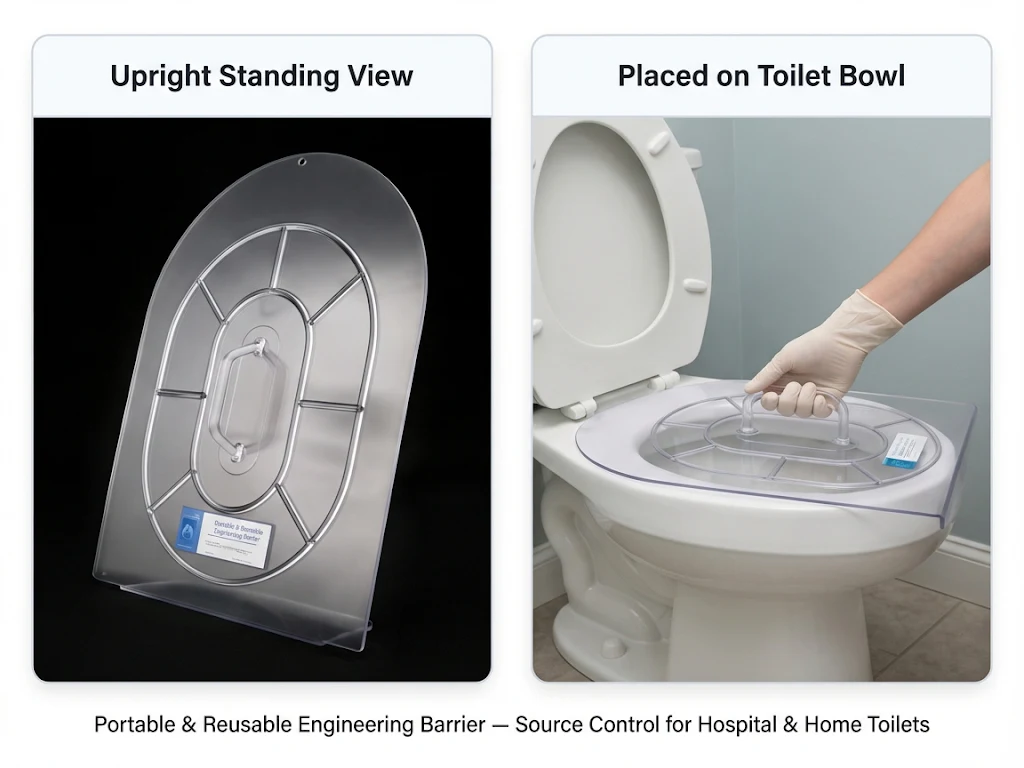
Portable & Reusable Engineering Barrier — Source Control for Hospital & Home Toilets
Medical-Grade Source Control Barrier
Engineered Bioaerosol Protection
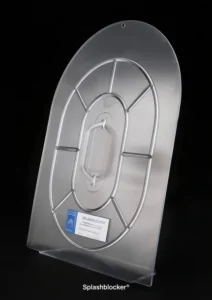
Splashblocker® is an FDA Class I exempt, portable, reusable physical containment barrier made of durable medical-grade copolyester that blocks Toilet Plume Aerosols (TPA) at the source. It prevents up to 99.98% of particles from escaping the flushed toilet into surrounding room air, protecting healthcare workers, patients, and family caregivers.

Invented by an Oncology Nurse
Created specifically to protect healthcare colleagues from toxic aerosol and pathogen exposure.

Proven 99.98% Efficacy*
Multi-center U.S. hospital studies prove 99.98% reduction of toilet plume aerosols (p=0.002).

100% Made in the USA
Manufactured domestically to meet rigorous healthcare durability and safety standards.
Studies & Evidence – Proof
*Seth Eisenberg & Changjie Cai (01 Oct 2024): Reducing the particles generated by flushing institutional toilets. Part II: Assessing a portable and reusable toilet cover in U.S. hospitals, Journal of Occupational and Environmental Hygiene.